



Phosphorus management plays a critical role in dialysis treatment for kidney failure. Hemodialysis often removes phosphorus more effectively in a single session. For example, studies show that Continuous Ambulatory Peritoneal Dialysis (CAPD) achieves better phosphate elimination compared to other peritoneal dialysis methods. However, peritoneal dialysis provides continuous clearance, which can lead to improved long-term phosphorus control for certain patients. Research highlights that CAPD patients experience lower serum phosphorus levels (4.84 mg/dL) compared to those undergoing Automated Peritoneal Dialysis (APD), where levels average 5.55 mg/dL. These differences emphasize the importance of tailoring dialysis methods to individual needs.
Key Takeaways
- Controlling phosphorus is very important for kidney failure patients. Removing it well can help them feel better and stay healthier.
- Continuous Ambulatory Peritoneal Dialysis (CAPD) often clears more phosphorus than Automated Peritoneal Dialysis (APD).
- Hemodialysis removes phosphorus well during treatments but can cause ups and downs in phosphorus levels between sessions.
- Patients should talk to their doctors to pick the best dialysis type for their needs and daily life.
- Eating the right foods and taking phosphate binders help control phosphorus along with dialysis.
Understanding Phosphorus in Dialysis
The Role of Phosphorus in the Body
Phosphorus plays a vital role in maintaining cellular functions and overall metabolism. It is a key component of adenosine triphosphate (ATP), the molecule responsible for energy transfer within cells. Additionally, phosphorus contributes to the structural integrity of bones and teeth by forming hydroxyapatite, a mineral that provides strength and rigidity. It also supports the function of cell membranes through its presence in phospholipids and aids in the regulation of acid-base balance in the body.
When phosphorus levels drop too low, severe complications can arise. For instance, hypophosphatemia, often seen in malnourished individuals, can lead to refeeding syndrome. This condition disrupts neuromuscular function and may result in life-threatening health issues. Proactively managing phosphorus levels through dietary intake or supplementation can prevent such complications and maintain cellular health.
Why Phosphorus Removal Is Critical in Kidney Failure?
In kidney failure, the body loses its ability to regulate phosphorus levels effectively. A significant decline in glomerular filtration rate disrupts phosphate homeostasis, causing phosphate retention. This retention leads to hyperphosphatemia, a condition linked to poor clinical outcomes in chronic kidney disease (CKD) patients. Elevated serum phosphate levels, particularly those exceeding 5.2–7.5 mg/dL, increase the risk of all-cause mortality by 39% compared to patients with normal levels (3.0–5.5 mg/dL).
| Phosphate Level (mg/dL) | Risk of All-Cause Mortality (%) |
|---|---|
| Greater than 5.2–7.5 | 39% greater risk |
| Normal (3.0–5.5) | Baseline risk |
High phosphorus levels also contribute to cardiovascular disease and accelerate the deterioration of renal function. The Kidney Disease: Improving Global Outcomes (KDIGO) guidelines recommend limiting dietary phosphorus intake for CKD patients in stages 3–5. This strategy aims to reduce phosphate levels and mitigate associated risks. Effective phosphorus removal through dialysis, combined with dietary adjustments, remains essential for improving patient outcomes and quality of life.
Mechanisms of Peritoneal Dialysis and Hemodialysis
How Peritoneal Dialysis Removes Phosphorus?
Peritoneal dialysis removes phosphorus through a continuous process that relies on the peritoneal membrane as a natural filter. Dialysis fluid, infused into the peritoneal cavity, absorbs excess phosphorus from the blood. This process occurs throughout the day, offering steady clearance. The effectiveness of phosphorus removal depends on the type of peritoneal dialysis used.
- Phosphate clearance rates by modality:
- Continuous Ambulatory Peritoneal Dialysis (CAPD): 1.89 ± 0.73 g/week
- Continuous Cyclic Peritoneal Dialysis (CCPD): 1.91 ± 0.63 g/week
- Automated Peritoneal Dialysis (APD): 1.34 ± 0.62 g/week
CAPD generally achieves better phosphorus elimination than APD. Patients undergoing CAPD often experience lower serum phosphorus levels (4.84 ± 1.23 mg/dL) compared to those on APD (5.55 ± 1.61 mg/dL). The volume of dialysis fluid infused also plays a significant role in determining phosphate clearance.
How Hemodialysis Removes Phosphorus?
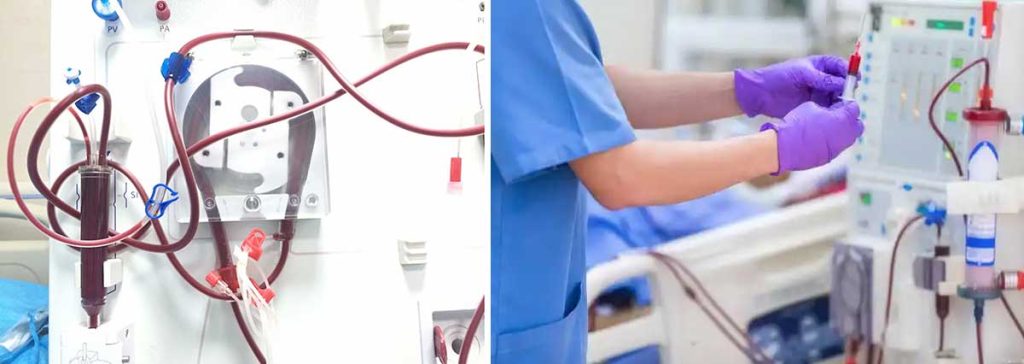
Hemodialysis removes phosphorus by filtering the blood through a dialyzer, or artificial kidney. During treatment, blood flows through the dialyzer, where a semipermeable membrane separates waste products, including phosphorus, from the blood. This process occurs over a few hours, typically three times per week.
The efficiency of phosphorus removal in hemodialysis depends on the type of dialyzer used. High-flux dialyzers and hemodiafiltration methods are more effective than low-flux dialyzers. However, hemodialysis provides intermittent clearance, which can lead to fluctuations in serum phosphorus levels between sessions.
| Dialysis Type | Phosphate Clearance (L/week) |
|---|---|
| CAPD | 41.50 |
| CCPD | 36.68 |
| APD | 25.42 |
| Hemodialysis (High-Flux) | Higher than PD |
Key Differences in Phosphorus Removal Mechanisms
Peritoneal dialysis and hemodialysis differ significantly in their mechanisms of phosphorus removal. Peritoneal dialysis offers continuous clearance, which helps maintain stable serum phosphorus levels. CAPD, in particular, provides higher phosphate elimination compared to APD. Hemodialysis, on the other hand, removes phosphorus more effectively during individual sessions but lacks the continuous clearance seen in peritoneal dialysis.
- Key distinctions:
- Peritoneal dialysis relies on the peritoneal membrane and continuous fluid exchange.
- Hemodialysis uses a dialyzer for intermittent, high-efficiency clearance.
- CAPD outperforms APD in phosphorus removal, while high-flux hemodialysis surpasses both.
Patients should work closely with their healthcare providers to determine the best dialysis modality for managing phosphorus levels effectively.
Comparing the Effectiveness of Peritoneal Dialysis and Hemodialysis
Phosphorus Removal Efficiency in Hemodialysis
Hemodialysis effectively removes phosphorus during each session by filtering blood through a dialyzer. High-flux dialyzers and hemodiafiltration methods enhance phosphate clearance compared to low-flux dialyzers. However, the intermittent nature of hemodialysis causes fluctuations in serum phosphorus levels between treatments. Dialysis patients undergoing hemodialysis often experience rapid reductions in phosphorus during sessions, but levels may rise again before the next treatment.
Studies indicate that hemodialysis achieves higher phosphate clearance rates than peritoneal dialysis. For instance, high-flux hemodialysis removes more phosphorus weekly compared to automated peritoneal dialysis (APD). Despite its efficiency, the reliance on scheduled sessions limits its ability to maintain stable phosphorus levels continuously.
Phosphorus Removal Efficiency in Peritoneal Dialysis
Peritoneal dialysis provides continuous phosphorus removal by using the peritoneal membrane as a natural filter. This method allows for steady clearance throughout the day, reducing fluctuations in serum phosphorus levels. Continuous Ambulatory Peritoneal Dialysis (CAPD) demonstrates higher phosphate clearance than APD due to its frequent manual exchanges. CAPD patients often achieve better phosphorus control, with lower serum levels compared to those using APD.
The infused volume of dialysis fluid significantly influences phosphorus removal in peritoneal dialysis. Larger volumes enhance phosphate clearance across all modalities. Although peritoneal dialysis may not match the single-session efficiency of hemodialysis, its continuous nature offers advantages for long-term phosphorus management.
Studies and Data Comparing the Two Methods
Several studies compare phosphorus removal between hemodialysis and peritoneal dialysis. The findings highlight differences in efficiency and patient outcomes:
| Study | Findings |
|---|---|
| Gomez et al. (2016) | Reported differences in phosphate equilibration rates across PD methods. |
| Kuhlmann (2010) | Discussed phosphate elimination in various dialysis modalities. |
| Sawin et al. (2012) | Found CAPD more effective than APD in phosphate clearance. |
| Bernardo et al. (2011) | Highlighted the role of peritoneal membrane transport in phosphate handling. |
| Evenepoel et al. (2006) | Found superior clearance in high-flux hemodialysis compared to PD. |
| Švára et al. (2016) | Analyzed phosphorus removal in low-flux and high-flux hemodialysis. |
Additional clinical trials reveal that CAPD outperforms APD in phosphorus clearance. Higher infused fluid volumes correlate with improved phosphate removal across all peritoneal dialysis methods. Patient selection biases, however, complicate direct comparisons between modalities. Hemodialysis generally achieves greater phosphate clearance per session, but peritoneal dialysis offers continuous removal, which benefits some dialysis patients.
Factors Influencing Phosphorus Removal in Dialysis
Impact of Dialysis Modality and Frequency
The choice of dialysis modality and its frequency significantly influence phosphorus removal. Peritoneal dialysis provides continuous clearance, while hemodialysis offers intermittent but highly efficient removal during each session. Studies show that higher infused volumes of dialysis fluid in peritoneal dialysis improve phosphate clearance. This relationship highlights the importance of optimizing fluid volume to enhance phosphorus elimination.
| Finding | Description |
|---|---|
| Phosphate Clearance | Higher peritoneal phosphate clearance was observed with greater infused fluid volumes. |
| Association | A positive correlation exists between infused volume and phosphorus removal. |
| Ultrafiltration | Phosphate clearance occurs primarily through diffusion, not ultrafiltration. |
In hemodialysis, the use of high-flux dialyzers enhances phosphate clearance compared to low-flux options. However, the intermittent nature of hemodialysis can lead to fluctuations in serum phosphorus levels between sessions. Patients undergoing peritoneal dialysis often experience more stable phosphorus levels due to its continuous nature.
Role of Patient-Specific Conditions
Patient-specific factors play a crucial role in determining the effectiveness of phosphorus removal. Characteristics such as age, body size, and residual kidney function influence the choice of dialysis modality. For example:
- Phosphate clearance varies significantly among peritoneal dialysis modalities like CAPD, CCPD, and APD.
- CAPD demonstrates higher phosphorus removal compared to APD.
- Patient characteristics often guide the selection of dialysis therapy, which may introduce biases in treatment outcomes.
Patients with higher residual kidney function may benefit more from peritoneal dialysis due to its continuous clearance. Conversely, those with severe hyperphosphatemia may require the rapid removal provided by hemodialysis.
Influence of Diet and Phosphate Binders
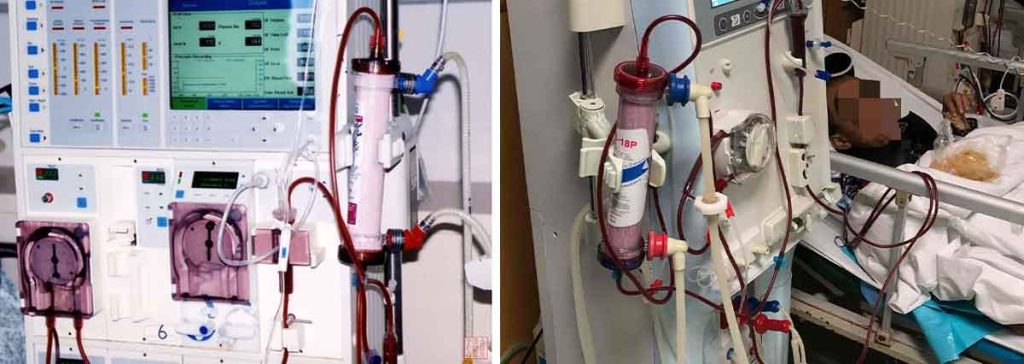
Dietary management and the use of phosphate binders are essential for optimizing phosphorus control in dialysis patients. Restricting dietary phosphate intake helps prevent hyperphosphatemia, a common complication in chronic kidney disease. Phosphate binders reduce the absorption of dietary phosphate in the gut, further aiding in phosphorus management.
- Dietary phosphate restriction is critical for managing hyperphosphatemia.
- Phosphate binders play a key role in reducing dietary phosphate absorption.
- Effective phosphorus control improves clinical outcomes and should be part of dialysis adequacy assessments.
Patients must work closely with their healthcare providers to develop a tailored dietary plan and ensure proper use of phosphate binders. Combining these strategies with effective dialysis can significantly improve phosphorus management and overall health outcomes.
Conclusion
Hemodialysis removes phosphorus more effectively during individual sessions, but its intermittent nature can lead to fluctuations in serum phosphorus levels. In contrast, peritoneal dialysis provides continuous phosphorus removal, which helps maintain more stable levels over time. Studies show that CAPD achieves higher phosphate clearance (41.50 L/week) compared to APD (25.42 L/week), making it a better option for some patients.
| Dialysis Modality | Phosphate Clearance (L/week) | Serum Phosphorus Levels |
|---|---|---|
| CAPD | Higher | Lower |
| APD | Lower | Higher |
The choice between these modalities should consider individual medical needs, lifestyle, and preferences. Patients must collaborate with their healthcare team to optimize treatment through effective dialysis, dietary adjustments, and calcium and phosphorus control strategies. Personalized approaches ensure better outcomes and improved quality of life.